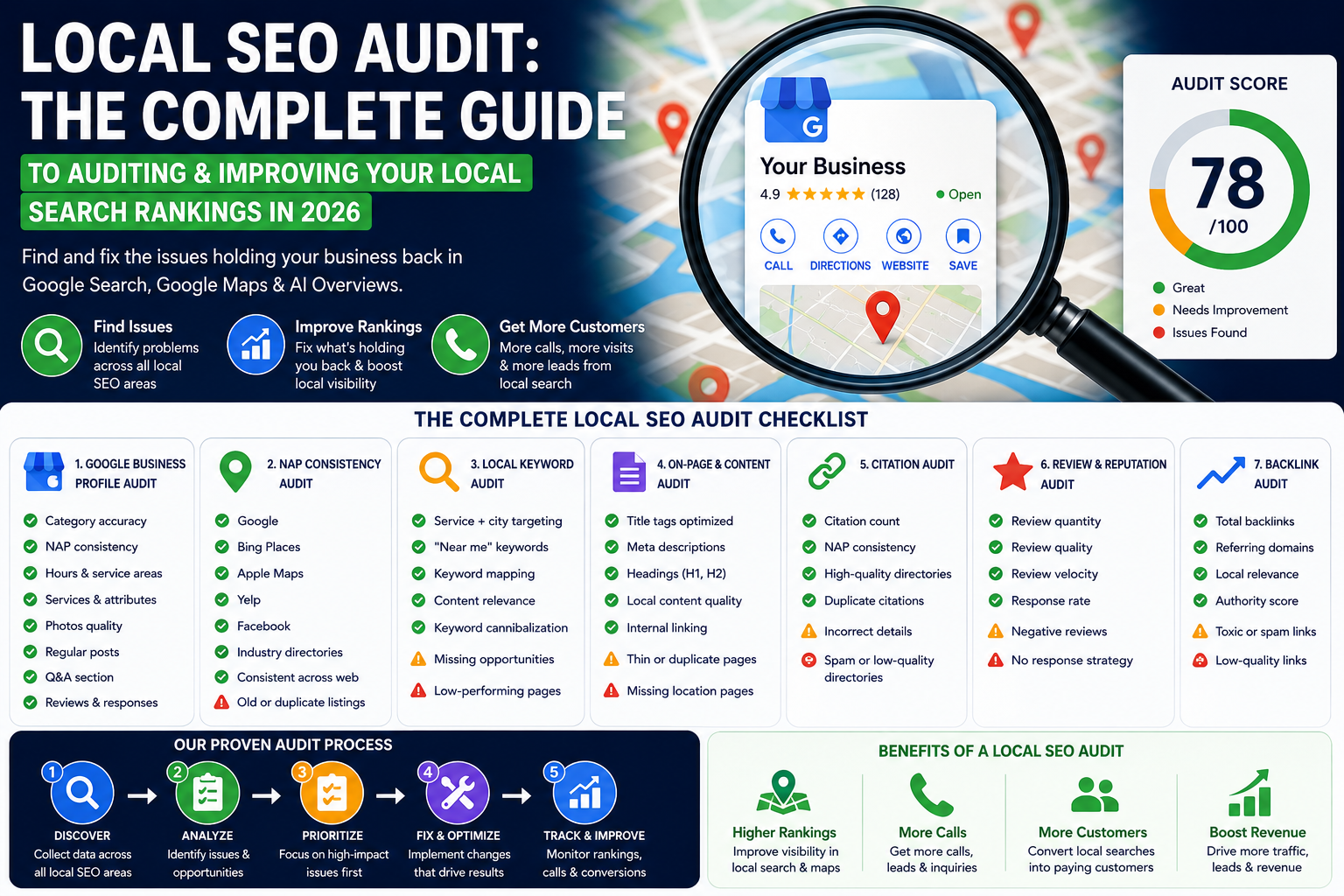
Local SEO Audit: The Complete Guide to Auditing and Improving Your Local Search Rankings in 2026
If your business isn't showing up in the map pack the way it used to, or your calls have quietly dried up over the last few months, there's usually a reason. It's rarely one big mistake. It's five or six small ones stacking up at once - a Google Business Profile that hasn't been touched in a year, a handful of directories still listing your old phone number, a location page that never got written, a pile of reviews nobody responded to. A local SEO audit is how you find every one of those problems in one pass, instead of guessing at them one at a time.
This guide walks through exactly what a proper local SEO audit covers in 2026, in the order you should actually do it, so you can either run it yourself or know what to expect if you're hiring someone to run it for you.
What Is a Local SEO Audit?
A local SEO audit is a structured review of everything that affects how a business ranks in local search - Google Search, Google Maps, and increasingly AI-powered results like AI Overviews. It's different from a standard SEO audit because it looks specifically at the signals that matter for "near me" and location-based searches: your Google Business Profile, your NAP consistency across the web, your location and service pages, your citations, your reviews, and your local backlink profile - on top of the technical and on-page basics.
A generic SEO audit might flag slow page speed or missing meta descriptions and stop there. A local SEO audit goes further and asks: does this business actually look trustworthy and relevant to Google for the specific city and service someone just searched for? That's a different question, and it needs a different checklist.
The businesses that benefit most from a full local SEO audit are the ones competing for space in the local pack - HVAC companies, dental practices, roofers, solar installers, law firms, auto repair shops, and any other service business where customers search by location before they buy.
Why a Local SEO Audit Matters More in 2026
Local search has gotten more competitive and more automated at the same time. AI Overviews now pull directly from structured data and high-authority local signals, which means profiles and websites that are inconsistent or incomplete get filtered out before a human ever sees them. Google's local algorithm weighs relevance, distance, and prominence, and every part of that equation - category selection, review volume, citation consistency, backlink authority - is something an audit can actually measure.
Businesses that skip a local SEO audit tend to have the same blind spot: they're optimizing the parts of their SEO they can see (the website) and ignoring the parts they can't (citations, GBP health, backlink profile, competitor movement). An audit forces you to look at the whole picture at once.
Google Business Profile Audit
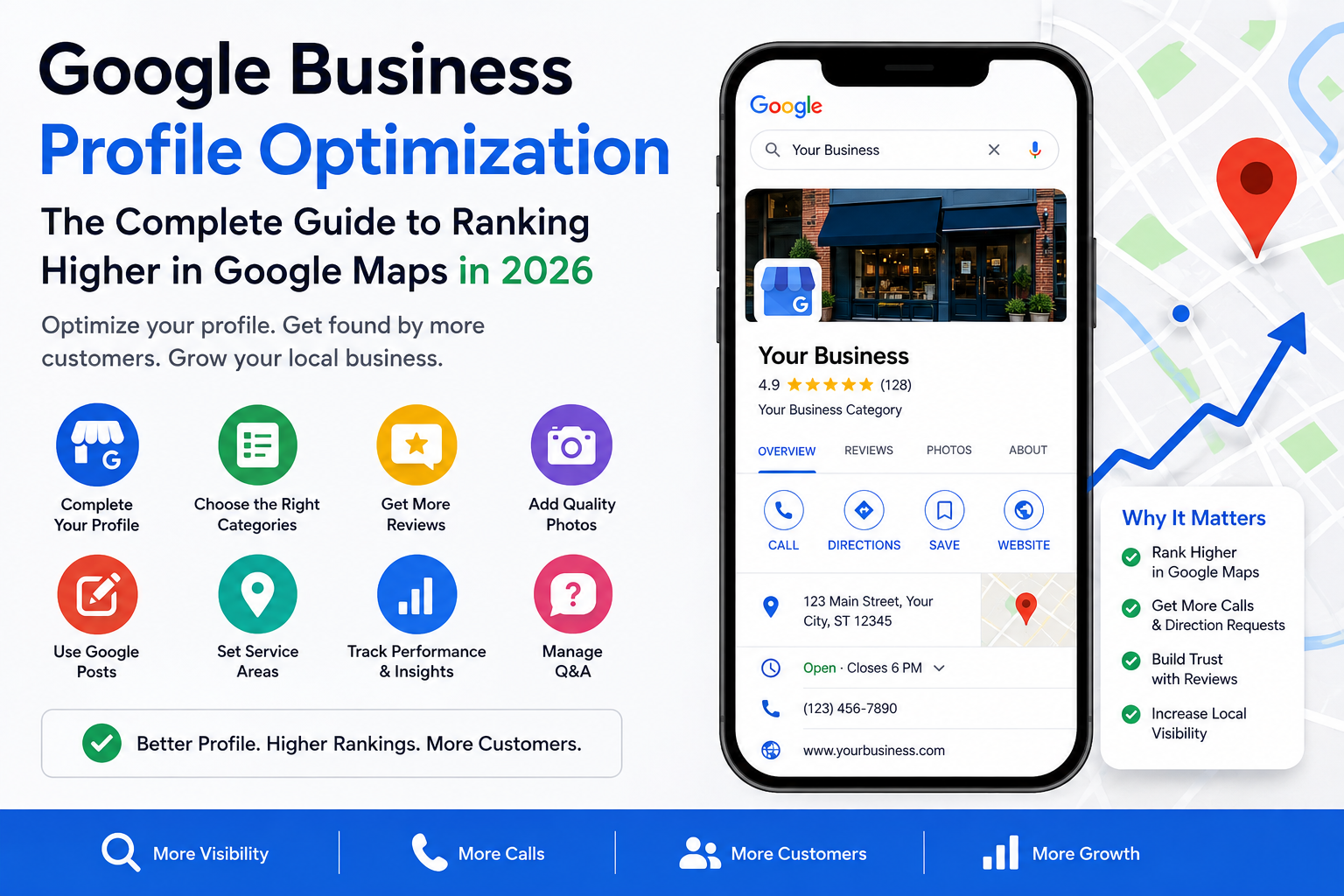
Your Google Business Profile is usually the single biggest lever in local search, so it's the right place to start. A proper GBP audit checks:
- Category accuracy — is your primary category the most specific match for what you actually do, and are your secondary categories relevant without overreaching?
- Business name — does it match your real-world signage exactly, with no keyword stuffing (a common suspension trigger)?
- NAP fields — is the address, phone number, and website URL correct and consistent with your other listings?
- Hours and service areas — are they current, including holiday hours?
- Services and attributes — are all services listed with accurate descriptions, and are relevant attributes filled in?
- Photos — are there recent, real photos of the team, location, and completed work, or is it still using stock images from setup?
- Posts — is the profile actively posting, or has it gone dormant?
- Q&A section — has anyone seeded it with real questions, or is it empty and vulnerable to spam answers?
- Review count and rating trend — is review velocity healthy, and is someone responding to every review?
A dental practice in Miami and an HVAC company in Phoenix both live or die by this section - it's the profile that shows up before the website ever gets a click.
NAP Consistency Audit
NAP — Name, Address, Phone number - sounds basic, but inconsistency here quietly undermines almost everything else. If your Google Business Profile lists "123 Main St," your website footer says "123 Main Street," and an old Yelp listing still has your previous suite number, Google has to reconcile three slightly different versions of your business. That uncertainty shows up as reduced trust and reduced rankings.
A NAP audit means pulling your listing from every major directory - Google, Bing, Apple Maps, Yelp, Facebook, industry-specific directories — and comparing them line by line against your official, current information. Any discrepancy, however small, goes on the fix list.
Local Keyword Audit
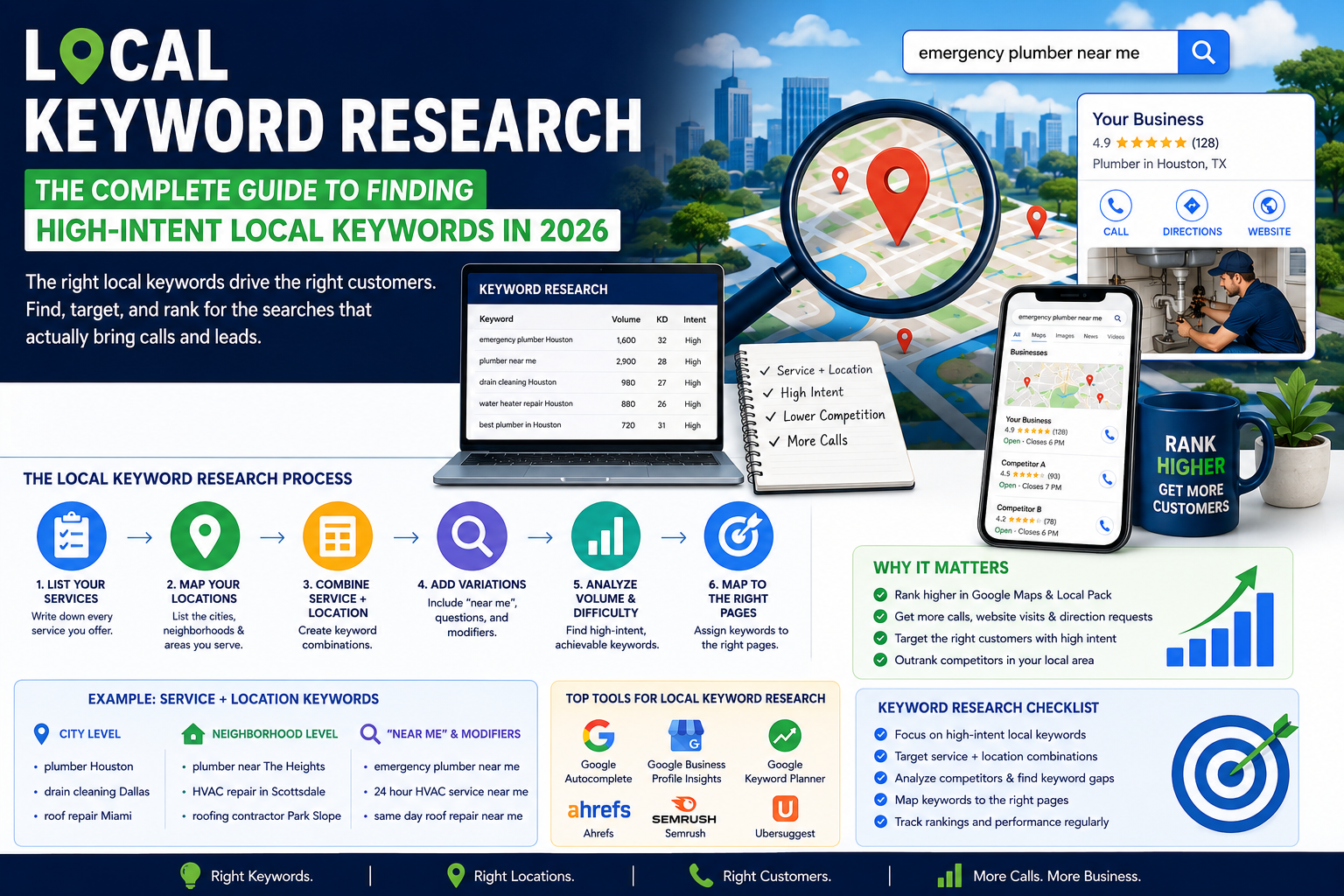
This is where you check whether your site is actually targeting the searches your customers are typing in. A local keyword audit looks at:
- Which service + city combinations you're currently ranking for, and which ones you're not
- Whether your target keywords match real search intent (a roofer in Atlanta searching "roof repair near me" has different intent than one searching "roof replacement cost")
- Keyword cannibalization - multiple pages competing for the same term instead of each owning a distinct one
- Gaps where a competitor ranks for a location or service term you don't have a page for at all
If you've already done dedicated keyword research, this step is about checking implementation - are those keywords actually placed in titles, headers, and body copy, or did the research stay in a spreadsheet?
Service and Location Page Audit
For any business with more than one service area, your location pages carry a lot of weight, and they're one of the most commonly botched parts of a local SEO strategy. The audit here checks:
- Does every city or service area you claim to serve actually have its own page, or are some areas only mentioned in passing?
- Is each page genuinely unique, with local landmarks, neighborhood references, and location-specific content - or is it a template with the city name swapped in?
- Does each page target a clear service + location keyword pair (for example, "emergency plumber in Tempe" rather than a generic "our services" page)?
- Are internal links connecting location pages to relevant service pages and vice versa?
- Is there a clear service area map or list so both users and Google understand exactly where you operate?
A solar company serving both Orlando and Jacksonville needs two real pages, not one page that mentions both cities in a single paragraph. Google can tell the difference, and so can customers.
Citation Audit
Citations are mentions of your business name, address, and phone number across the web, whether or not they link back to you. A local citation audit checks:
- Which directories currently list your business (data aggregators, industry-specific sites, local chambers of commerce, review platforms)
- Whether the information on each listing matches your current NAP
- Duplicate listings, which confuse both users and Google's local algorithm
- Missing citations on high-authority or industry-relevant directories where competitors are already listed
Citation cleanup is unglamorous work, but it's one of the most reliable ways to strengthen prominence signals, especially for newer businesses that haven't built up much else yet.
Local Backlink Audit
Backlinks still matter for local rankings, but not all backlinks carry the same weight for local relevance. A local backlink audit looks at:
- How many referring domains are local to your service area (local news sites, chambers of commerce, sponsorships, local business associations)
- Whether you have links from industry-relevant sites versus generic, low-value directories
- Anchor text patterns - natural variation versus obvious over-optimization
- Competitor backlink gaps - links your competitors have that you don't
For most local businesses, a handful of genuinely local, relevant links outperform dozens of generic directory submissions. A law firm in Denver benefits more from a link on a local bar association page than from ten low-quality general directories.
Review Audit
Reviews influence both rankings and conversion rate, so they get their own section in a proper audit. This covers:
- Total review count and rating across Google, Facebook, and any industry-specific platforms
- Review velocity - are new reviews coming in consistently, or in occasional bursts followed by long gaps?
- Response rate - is the business replying to reviews, especially negative ones, and how quickly?
- Whether reviews mention relevant services and locations naturally (which helps reinforce relevance signals)
- Any policy violations, like incentivized or fake-looking reviews that could put the profile at risk
A roofing company that gets a rush of five-star reviews after every storm response, but never replies to any of them, is leaving an easy win on the table.
On-Page Local SEO Audit
This is the traditional on-page SEO layer, applied specifically through a local lens:
- Title tags and meta descriptions that include the target service and location
- H1s and header structure that reflect local search intent
- Body content that reads as genuinely local, not a generic template with a city name inserted
- Internal linking between related service and location pages
- Image alt text referencing relevant services and locations where appropriate
- Mobile usability, since the overwhelming majority of local searches happen on a phone
Local Schema Markup Audit
Structured data helps search engines and AI systems understand exactly what your business is, what it offers, and where it operates. A schema audit checks whether your site has:
- LocalBusiness or the more specific relevant subtype (for example, a dental practice should use Dentist, not a generic LocalBusiness)
- Accurate NAP data matching your GBP and citations
- Service schema for each core offering
- Review or aggregate rating schema, but only where the underlying data is real and verifiable - fabricated review counts in schema is a fast way to trigger a manual action
- FAQ schema on pages where genuine FAQ content exists
Missing or incorrect schema doesn't just cost you rich results in classic search - it increasingly affects whether AI-generated answers reference your business at all.
Google Maps Visibility Audit
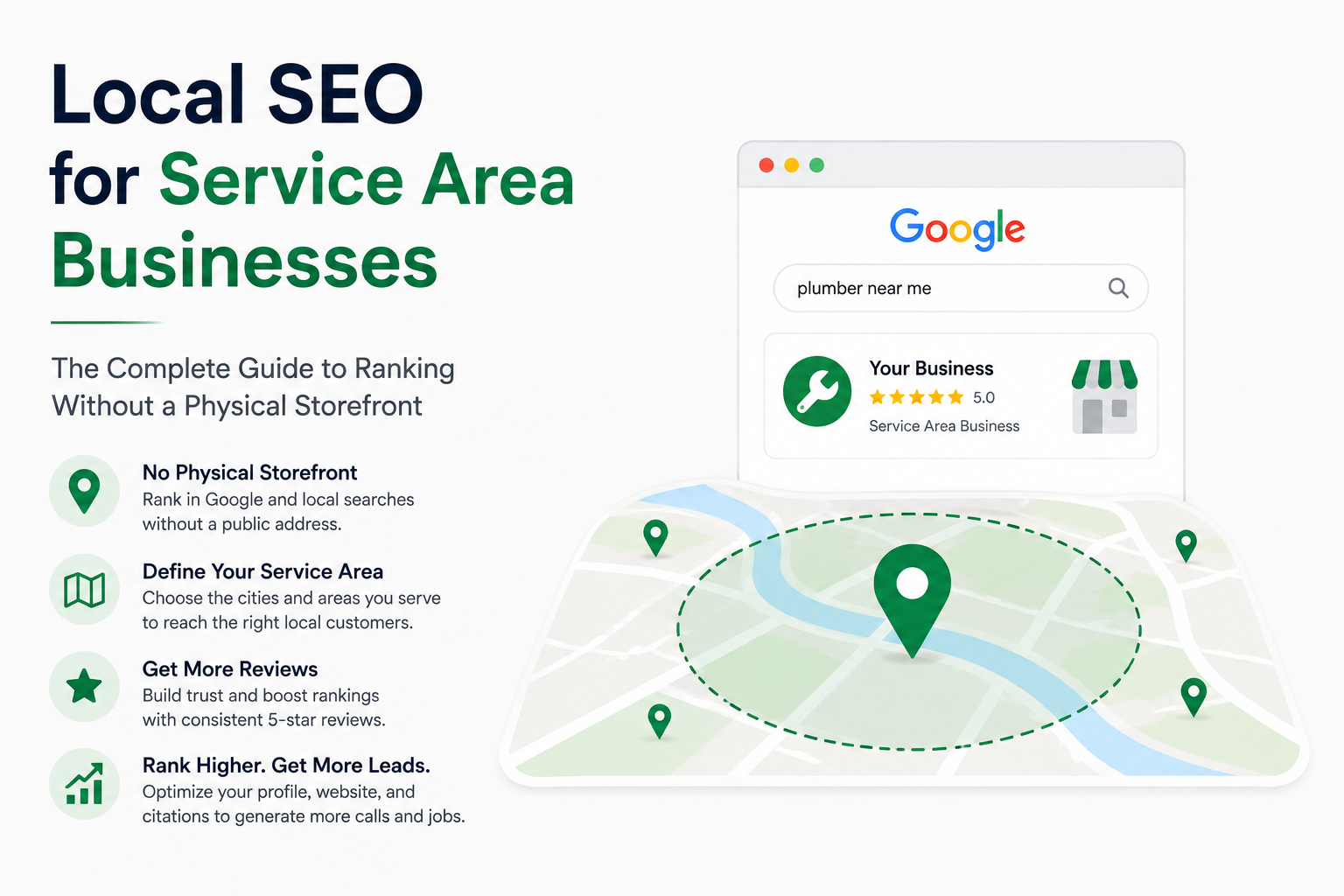
This step checks how your business actually appears in the map pack for its core service and location terms, not just where it ranks in organic search. Tools like local rank trackers or grid-based visibility checkers show how consistently a business appears across a service area, rather than just a single central point. A business might rank #1 near its office but drop off the map entirely ten miles away, which matters a lot for a service-area business that drives to customers rather than the other way around.
Competitor Analysis
No local SEO audit is complete without looking at who's actually beating you. A local competitor analysis compares your business against the top three to five map pack competitors for your core terms, looking at:
- Review count and rating relative to yours
- GBP completeness and posting activity
- Number and quality of location pages
- Citation and backlink profile strength
- Website technical performance
This step turns the audit from a list of your own problems into a realistic picture of what it actually takes to outrank the businesses currently sitting in the top three spots.
Technical SEO Audit
Local rankings still depend on the fundamentals working properly underneath everything else:
- Core Web Vitals and page speed, especially on mobile
- Crawlability and indexation — are all your location and service pages actually indexed?
- Broken links, redirect chains, and duplicate content
- HTTPS and basic site security
- XML sitemap accuracy, including all location pages
A beautifully optimized location page that Google can't crawl properly is still invisible, no matter how good the content is.
Setting Up Local Rank Tracking
An audit is a snapshot, not an ongoing process, so the last step is making sure you can actually measure progress after the fixes go live. That means tracking rankings for your priority keyword and location combinations, monitoring GBP insights (calls, direction requests, website clicks), and checking review growth month over month. Without this in place, it's impossible to know whether the audit actually moved the needle.
Common Issues Found in Local SEO Audits - and How to Fix Them
A few problems show up in almost every audit, regardless of industry:
- Duplicate or unclaimed GBP listings. Fix: claim and merge duplicates through Google's official process.
- Inconsistent NAP across directories. Fix: standardize your NAP format and update it everywhere, starting with the highest-authority listings.
- Thin or duplicated location pages. Fix: rewrite each page with genuinely local content, not a swapped city name in a template.
- Stagnant reviews. Fix: build a simple, consistent system for requesting reviews after every completed job.
- Missing schema markup. Fix: implement LocalBusiness and Service schema site-wide, using only real, current data.
- Slow or non-mobile-friendly pages. Fix: prioritize Core Web Vitals fixes on the pages that drive the most local traffic first.
None of these are exotic problems. They're common precisely because they're easy to overlook when there's no formal audit process forcing a business to check.
How Often You Should Run a Local SEO Audit
A full audit once or twice a year is typically enough for most local businesses, with lighter monthly check-ins on GBP activity, review response, and ranking movement in between. Businesses in highly competitive markets, or those actively investing in local SEO, often benefit from a quarterly review instead, since competitors and algorithm updates can shift the landscape faster than an annual audit can catch.
Bringing It All Together
A local SEO audit isn't a one-time report to file away - it's the baseline that every other local SEO decision should come from. Once you know exactly where your Google Business Profile, citations, pages, reviews, and backlinks stand, local SEO optimization stops being guesswork and becomes a prioritized list: fix the biggest gaps first, track the results, and repeat. That's the difference between a business that occasionally shows up in the map pack and one that owns it consistently, month after month.